We are on collective vacation from 22.06.2026 to 05.07.2026. We will be back on 06.July 2026.



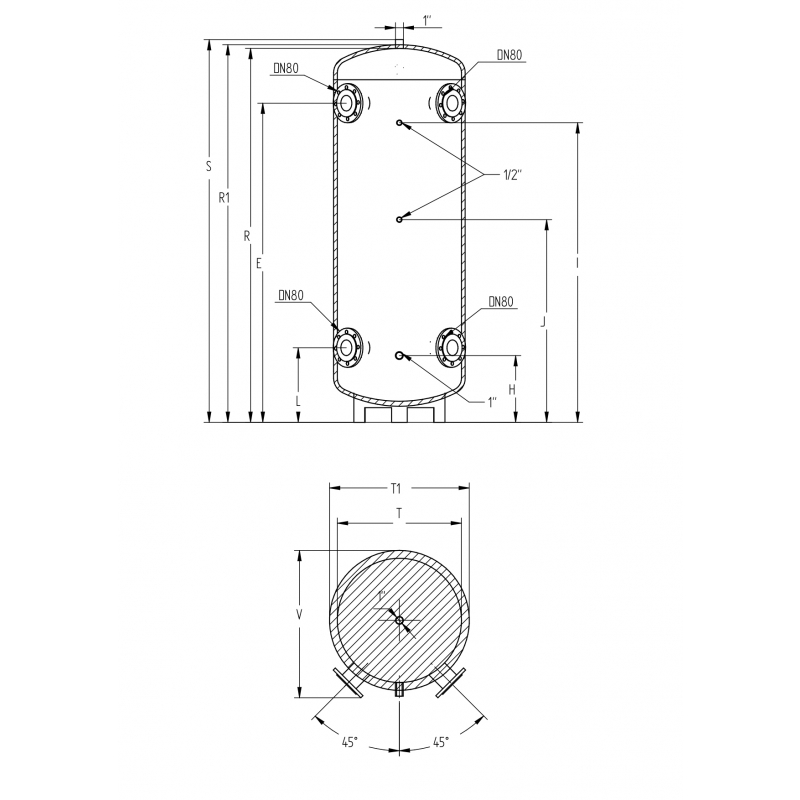
The accumulator tank operates under pressure. The selection, installation, and maintenance of the tank must be carried out by qualified specialists who follow the manufacturer’s instructions, the system design, and local requirements. Here are the key points to keep in mind when using an accumulator tank.
Follow the technical specifications for the accumulator tank
The accumulator tank’s product label lists its capacity, maximum allowable operating pressure, and operating temperature. The system’s pressure and temperature must remain within these limits.
The accumulator tank’s serial number is located near the metal MI logo. It is required for technical inquiries, warranty claims, and tank identification. The product label must remain intact and legible.
Use appropriate protective equipment
The system must be equipped with a pressure-limiting safety valve. Its opening pressure must be equal to or lower than the maximum allowable pressure indicated on the tank’s product label.
The temperature of the water in the accumulator tank must remain below 90 °C, and the system must be protected against overpressure.
Protect the accumulator tank from corrosion and freezing
To reduce the risk of corrosion, the system must be properly grounded. The combined effects of the water’s properties, oxygen content, dissolved salts, and the various metals used in the system must also be taken into account.
The tank and piping must be protected against freezing. With a suitable antifreeze fluid, the tank can be used at temperatures as low as –10 °C. When selecting and handling the fluid, follow its safety and environmental requirements.
Use only suitable fluids
The accumulator tank is designed for use with liquids that are suitable and safe for the heating system. The water must be clean and free of sand, clay, or other solid particles.
Chemicals, solvents, petroleum products, acids, bases, and substances that pose a fire, explosion, or poisoning hazard can damage the tank and make its use dangerous.
Choose a suitable installation location
The accumulator must be installed on a stable base in a location where drainage is also possible. There must be sufficient space around the tank, piping, and connections to allow for inspection, maintenance, and replacement of parts.
If there is a risk of vibration, use appropriate insulation or mounting.
Check the accumulation tank regularly
It is a good idea to check the condition of the tank at least every six months. Pay attention to the following:
- leaks and corrosion;
- visible damage or deformations;
- connection points;
- Insulation condition.
During maintenance and repair work, the system must be shut down, cooled, depressurized, and drained. If any pressurized components are damaged, the tank must be replaced.
The safe and long-term use of the tank is ensured by the right choice, professional installation, suitable operating conditions, and regular inspections.
Summary
The safe and long-term use of a storage tank is ensured by the right choice, professional installation, suitable operating conditions, and regular inspections.
The most important thing is to monitor the tank’s technical specifications, the system’s pressure and temperature, the suitability of the safety valve, protection against corrosion and freezing, and the tank’s overall condition.